Tech explained
Bluetooth 5.0 vs 5.3: Do Bluetooth Versions Matter?
Newer Bluetooth versions mainly improve Bluetooth Low Energy: 5.0 doubled its speed and extended its range, 5.2 laid the groundwork for LE Audio, and 5.3 made connections more efficient. For music on everyday earbuds, the codec, drivers and fit matter more than whether it says 5.0 or 5.3.
"Bluetooth 5.3" has become a selling point on earbuds, watches and speakers. It is a real improvement, but not in the way most people assume. Here is what each version changed and what actually affects the experience.
A quick history of Bluetooth versions
| Version | Year | What it added |
|---|---|---|
| 4.2 | 2014 | Faster, more private Bluetooth Low Energy (BLE) |
| 5.0 | 2016 | BLE at twice the speed, or up to four times the range |
| 5.1 | 2019 | Direction finding, for more precise location |
| 5.2 | 2020 | Foundations of LE Audio, better power control |
| 5.3 | 2021 | More efficient, more stable connections with less interference |
| 5.4 | 2023 | Large networks of tiny devices, encrypted advertising |
The catch: music mostly uses "Classic" Bluetooth
Bluetooth has two radios in one: Classic (BR/EDR), which most earbuds and speakers still use to stream music, and Low Energy, used by fitness bands, trackers and sensors. Many headline gains in 5.x, such as doubled speed and longer range, apply to Low Energy. That is why a 5.3 pair of earbuds does not suddenly sound better or reach through more walls than a good 5.0 pair.
What newer versions do help with
- Battery life: efficiency features in 5.2 and 5.3 can reduce power use.
- Connection stability: 5.3 helps devices avoid busy radio channels, which matters on crowded trains and in offices.
- Wearables and trackers: smartwatches, bands and item finders rely on Low Energy, so they benefit most.
- LE Audio, when both ends support it: a newer codec (LC3) and audio sharing, built on 5.2 features.
What matters more for sound
- The codec. SBC works everywhere; AAC suits iPhone; aptX and LDAC are common on Android.
- The drivers and tuning of the earbuds or speaker.
- Fit. A good seal changes bass and noise far more than any version number.
- Latency for gaming and video, which some models reduce with a game mode.
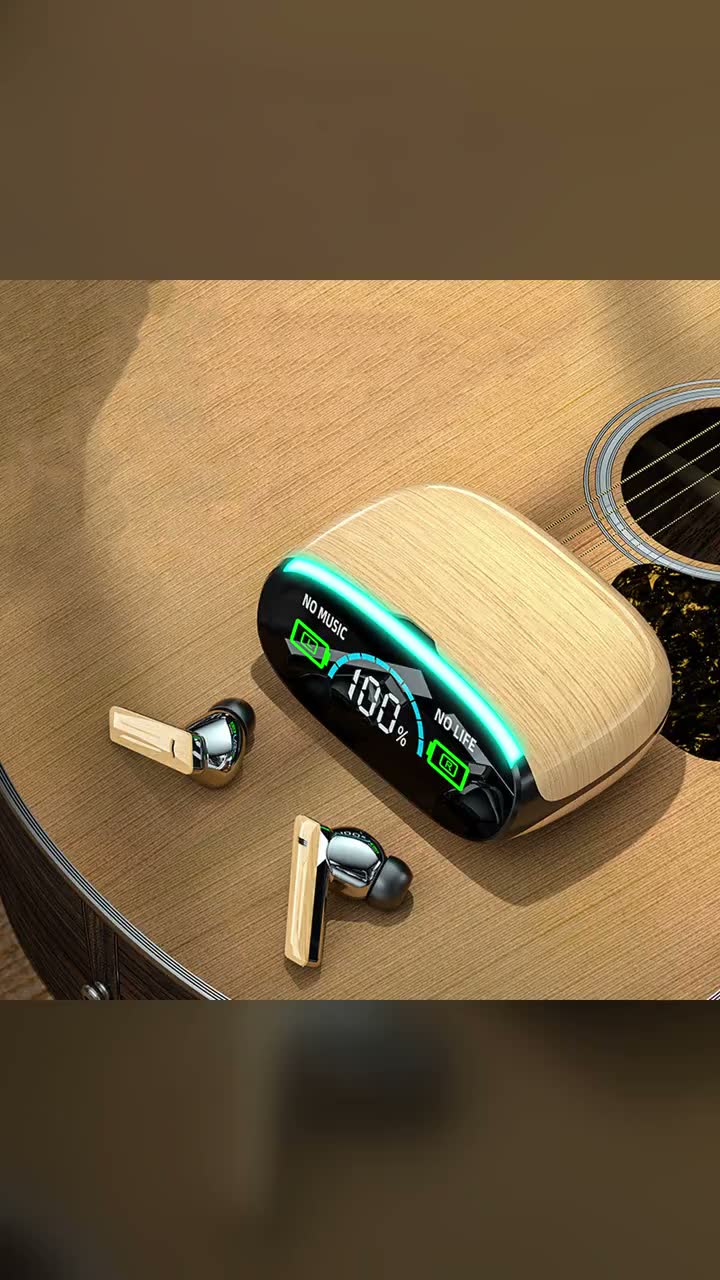 Wood Grain Sports Earbuds (BT 5.3)Bluetooth 5.3, USB-C and CVC 8.0 call noise reduction.Watch the reel →
 Open-Ear Clip Earbuds (BT 5.3)Bluetooth 5.3 in an ear-clip design that leaves your ears open.Watch the reel →
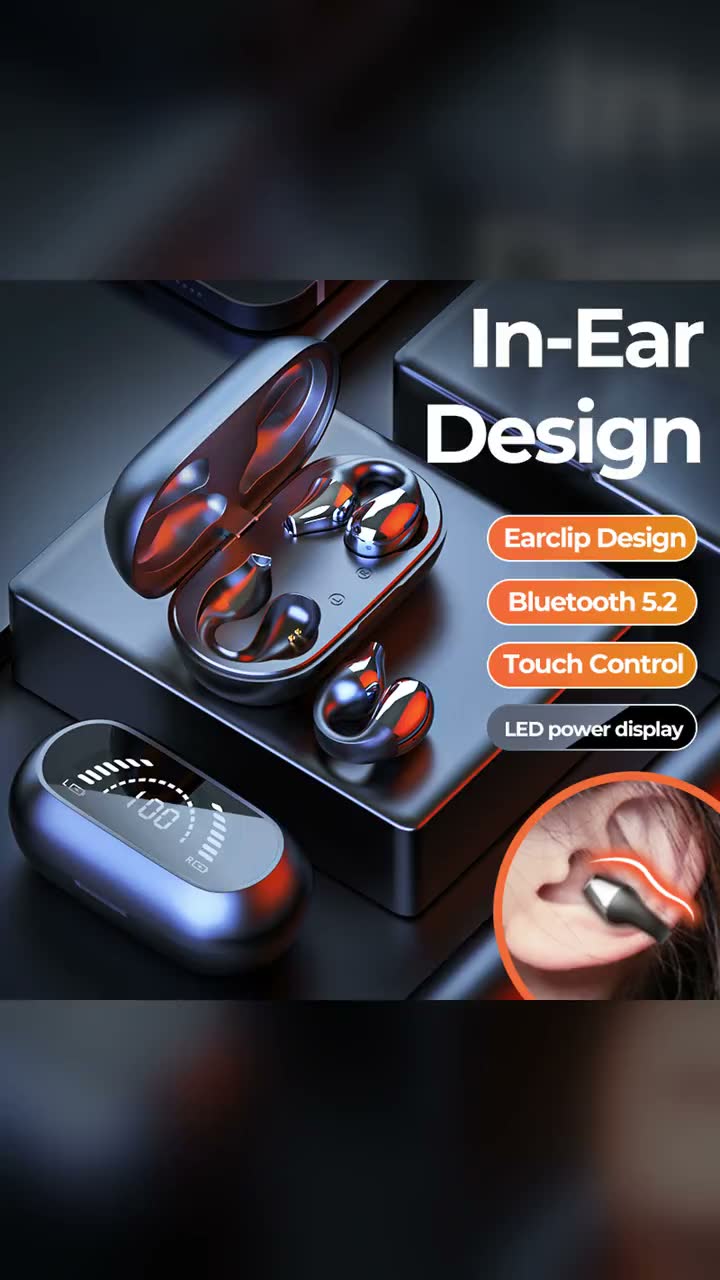 Ear-Clip Headphones (BT 5.2)A clip-on open-ear pair on Bluetooth 5.2.Watch the reel →
 TWS-X11 Earbuds (BT 5.0)Bluetooth 5.0 with multipoint connection and a battery display.Watch the reel →
Compatibility is not a problem
Bluetooth is backward compatible: a 5.3 headset pairs with a phone from 2017, and a new phone pairs with old earbuds. The pair simply uses the features both support.
Choosing earbuds? Read our guides to wireless earbuds under $30 and low-latency gaming earbuds.
Frequently asked questions
Is Bluetooth 5.3 better than 5.0 for earbuds?
Slightly, mainly in power efficiency and connection stability. You will not hear a difference in sound quality from the version number alone; the codec and drivers decide that.
Can a Bluetooth 5.3 device connect to an older phone?
Yes. Bluetooth is backward compatible. The connection simply uses the features both devices support, so a 5.3 headset works with a 4.2 phone, just without the newer features.
What Bluetooth version do I need for good sound?
Any version from 4.2 up streams music well. For better sound, look at the codecs both devices support, such as AAC on iPhone or aptX and LDAC on many Android phones.
What is LE Audio?
LE Audio is the next generation of Bluetooth audio, built on features added in Bluetooth 5.2. It uses the more efficient LC3 codec and supports sharing one audio stream with many listeners, but both devices must support it.